
Palmer Station Antarctica LTER
Studying the ecology of the Antarctic Peninsula for over 30 years
The Palmer Long-Term Ecological Research (LTER) study area is located to the west of the Antarctic Peninsula extending South and North of the Palmer Basin from onshore to several hundred kilometers off shore. Palmer Station is one of the three United States research stations located in Antarctica. It is on Anvers Island midway down the Antarctic Peninsula at latitude 64.7 South, longitude 64.0 West.
The Palmer LTER studies a polar marine biome with research focused on the Antarctic pelagic marine ecosystem, including sea ice habitats, regional oceanography and terrestrial nesting sites of seabird predators. The Palmer LTER is one of more than 26 LTER research sites located throughout the United States, Puerto Rico and Tahiti; each focused on a specific ecosystem, that together constitute the LTER Network.
News from Palmer LTER
 https://pallter.marine.rutgers.edu/wp-content/uploads/2024/04/hoos_in_stem.jpeg
268
268
Sage Lichtenwalner
https://pallter.marine.rutgers.edu/wp-content/uploads/2021/03/pal-site-logo_2_2.png
Sage Lichtenwalner2024-04-23 14:24:322024-04-23 14:25:51Earth Day with Scott Doney
 https://pallter.marine.rutgers.edu/wp-content/uploads/2024/01/Gallagher_2024_fig3.png
601
648
Sage Lichtenwalner
https://pallter.marine.rutgers.edu/wp-content/uploads/2021/03/pal-site-logo_2_2.png
Sage Lichtenwalner2024-01-15 19:30:592024-01-15 19:31:35New Paper on marine debris found near Palmer Station
 https://pallter.marine.rutgers.edu/wp-content/uploads/2021/03/pal-site-logo_2_2.png
0
0
Sage Lichtenwalner
https://pallter.marine.rutgers.edu/wp-content/uploads/2021/03/pal-site-logo_2_2.png
Sage Lichtenwalner2023-12-21 16:00:002023-12-18 21:27:19Looking Forward: The Race to Save Antarctic Penguins
 https://pallter.marine.rutgers.edu/wp-content/uploads/2023/12/JoyFerenbaugh-AdamsState-Fall2023.jpg
1702
1700
Sage Lichtenwalner
https://pallter.marine.rutgers.edu/wp-content/uploads/2021/03/pal-site-logo_2_2.png
Sage Lichtenwalner2023-12-20 18:27:102023-12-18 18:35:28Joy Ferenbaugh appointed Assistant Professor
https://pallter.marine.rutgers.edu/wp-content/uploads/2021/03/pal-site-logo_2_2.png
0
0
Sage Lichtenwalner
https://pallter.marine.rutgers.edu/wp-content/uploads/2021/03/pal-site-logo_2_2.png
Sage Lichtenwalner2023-12-19 16:00:002026-09-04 10:32:30Upside Down Ocean: Unraveling the Crisis of Antarctic Sea Ice
https://pallter.marine.rutgers.edu/wp-content/uploads/2023/12/Palmer-Glacier-2023.png
636
1200
Sage Lichtenwalner
https://pallter.marine.rutgers.edu/wp-content/uploads/2021/03/pal-site-logo_2_2.png
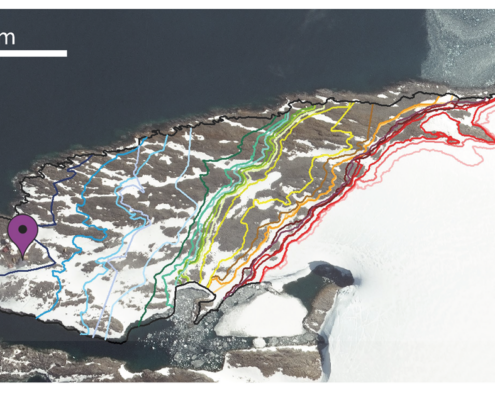
Sage Lichtenwalner2023-12-18 16:36:002023-12-18 16:36:03New Paper: 60 years of glacial retreat behind Palmer Station



 This site was developed with the support of the National Science Foundation under Grant No. OPP-2224611 and OPP-2026045. Any opinions, findings, and conclusions or recommendations expressed in this material are those of the authors and do not necessarily reflect the views of the National Science Foundation.